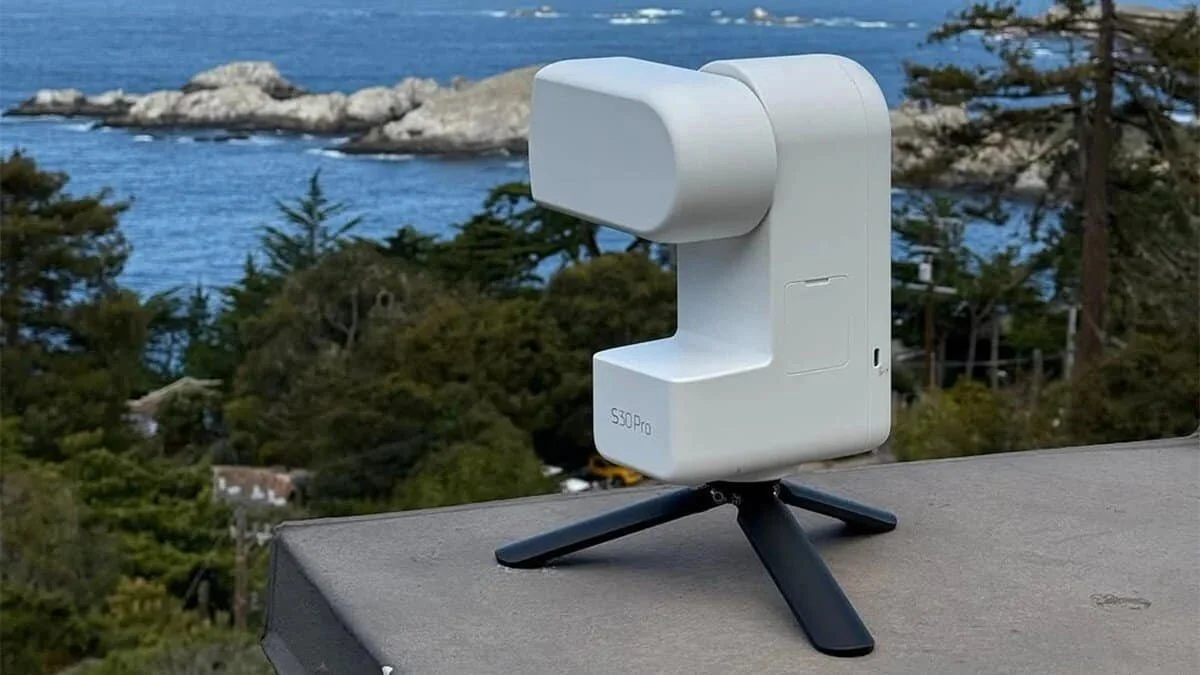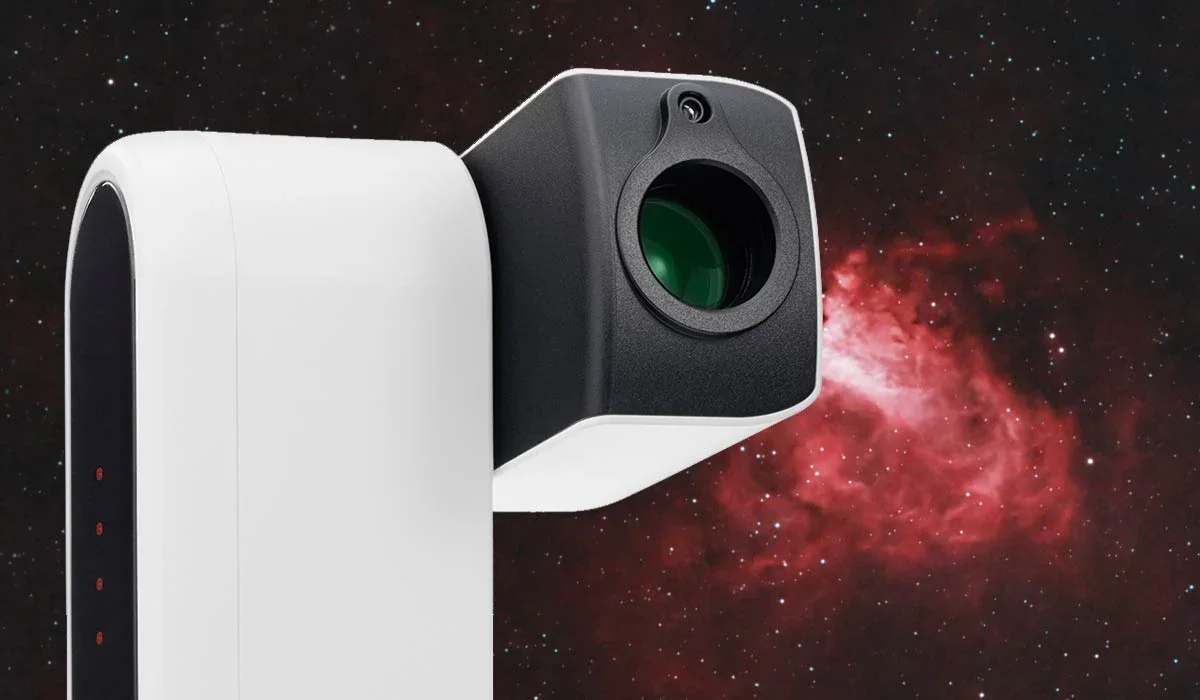
The Seestar S30
The Seestar S30 is a lightweight, all-in-one smart telescope that’s perfect for schools. With its built-in camera, motorized mount, and intuitive mobile app, students can point, capture, and observe the night sky in minutes—no experience or fiddly setup required. The telescope’s live-stacking, auto-tracking, and AI noise‑reduction features make astrophotography fun, accessible, and engaging.(AstroBackyard)
Classroom-Ready: The Seestar S30 in Depth
🔍 Capabilities & Design
Compact & portable: Weighing just ~1.65 kg (3.6 lb) including the tripod and about the size of a soda bottle, the S30 is easy to transport between classrooms, schoolyards, or off-site stargazing events.(oc telescope)
Smart optical system: Features a 30 mm f/5 apochromatic triplet refractor with ED glass and a 150 mm focal length. This delivers surprisingly crisp, color-accurate images given its size. There's also a secondary wide‑angle lens (23° field of view) useful for framing and terrestrial photography.(Astronomy Technology Today)
Ease of Use
Automated setup: No polar alignment or manual focusing needed. Built-in GPS, accelerometers, and onboard sensors let the telescope self-align quickly. Kids can be exploring deep-sky targets within five minutes of setup.(Astronomics)
App‑based control: The Seestar app for Android and iOS includes a Sky Atlas of 4,000+ celestial objects, one‑tap go‑to navigation, live stacking, autofocus, and AI-enhanced post-processing for clean, sharp images.(High Point Scientific)
Imaging & Educational Value
Three imaging modes:
Stargazing for nebulae, galaxies, and star clusters
Solar system for the Moon and Sun (using the included magnetic solar filter)
Scenery for daytime/Astro-landscape photography.(AstroBackyard)
AI-enhanced results: Images are automatically stacked and cleaned via built‑in AI noise reduction—great for students who may not want to dive into complex editing software initially.(Astronomy Technology Today, Astro Forum Space)
Why Ideal for School Programs
Engaging & fun: The mix of real-time imaging, planetarium-style app, and hands-on operation sparks curiosity in young learners.
Low barrier to entry: No prior knowledge needed—teachers and pupils can focus more on exploration and less on tech configuration.
Versatility across curricula: It supports science, physics, photography, and even art lessons through astro-imaging and landscape modes.
Safety & durability: Designed with a robust build and a dew heater (plus optional dew shield add-ons) to remain operational in typical UK school environments.(Cloudy Nights, Astronomy Technology Today)
Some Limitations to Note
While excellent for outreach and beginner imaging, the small 30 mm aperture limits fine planetary detail and very faint object resolution. Some users report minor aberrations or edge distortion under certain conditions—especially toward the field edges, though central sharpness is preserved.(Space)
Planetary imaging detail (e.g. Jupiter’s bands or Saturn’s rings) is minimal with this model. It’s designed more for broad-field deep-sky viewing than high‑resolution planetary work.(Astronomics)
In summary the Seestar S30 is an excellent telescope choice for school-based astronomy. It offers a robust blend of simplicity, portability, and surprise-worthy image quality. While it'll never replace a larger research-grade instrument, it’s perfect for inspiring students and giving them a hands‑on window into the universe.